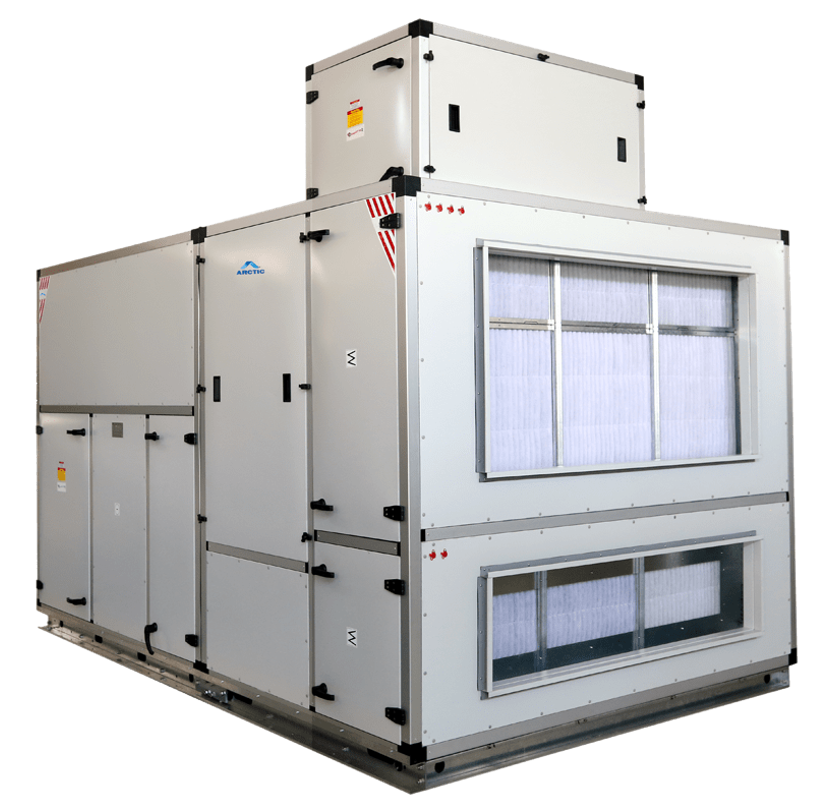
Industrial facilities need effective cooling systems to manage rising temperatures, maintain comfortable working conditions, and support equipment performance. Traditional air conditioning can provide temperature control, but its energy requirements may be significant in large buildings that need continuous cooling and ventilation. An indirect evaporative cooling system offers an alternative by using the cooling effect of water evaporation to lower air temperature without directly adding moisture to the supply air.
Understanding how this technology works helps facility managers, HVAC engineers, and industrial decision-makers determine whether it suits their building, climate, and operational requirements. Factors such as outdoor humidity, required airflow, heat loads, and installation design all influence the system’s performance.
This guide explains the working principles of indirect evaporative cooling, its differences from direct cooling, its main advantages, and the considerations involved in selecting a suitable system for industrial facilities.
What Is an Indirect Evaporative Cooling System?
An indirect evaporative cooling system is an air cooling technology that transfers heat from one air stream to another through a heat exchanger. Water evaporation cools the secondary air stream, which removes heat from the primary supply air without allowing the two streams to mix directly.
This separation is an important feature because the supply air can be cooled without the same direct moisture addition associated with conventional direct evaporative cooling. The technology can be useful in facilities that require fresh air and temperature management while maintaining better control over indoor humidity.
The Basic Principles of Indirect Evaporative Cooling
The system relies on the physical process of evaporation. When water changes from a liquid into vapour, it absorbs heat from its surroundings. An indirect cooling arrangement uses this principle to lower the temperature of one air stream and then transfers that cooling effect to another stream.
Unlike a conventional air conditioner that typically uses a refrigerant-based refrigeration cycle, an evaporative system uses water and airflow as key parts of the cooling process. Its achievable cooling performance depends on outdoor air conditions, system design, and the effectiveness of heat transfer.
The Role of Heat Exchangers and Evaporative Cooling Modules
The heat exchanger separates the primary air stream from the secondary air stream. Water is used to cool the secondary side, allowing heat to move away from the primary air without direct contact between the two streams.
Fans maintain the required airflow, while evaporative cooling modules support the water evaporation process. The design of these components affects heat transfer, pressure drop, airflow distribution, and overall operating efficiency. Correct sizing and regular maintenance are therefore essential for reliable performance.
How Indirect Cooling Helps Limit Moisture Addition to Supply Air
Because the primary and secondary air streams remain separated, moisture generated through evaporation on the secondary side does not directly enter the primary supply air. This makes indirect cooling relevant where controlling additional indoor moisture is important.
However, it does not automatically dehumidify the supply air or guarantee a particular indoor humidity level. Actual humidity conditions depend on the incoming air, building ventilation, internal moisture sources, and the complete cooling system design.
For more information about equipment and applications, explore the indirect evaporative cooling system range.
How Does an Indirect Evaporative Cooling System Work?
The cooling process involves drawing in outdoor air, transferring heat through a heat exchanger, and delivering cooled air to the intended space. Each stage must be designed to work with the building’s ventilation requirements and the local climate.
Step 1: Drawing in Hot Outdoor Air
The system draws outdoor air into the unit through an intake. Depending on the equipment configuration, this air enters the primary air passage and moves through the heat exchanger. Filters may be incorporated to help manage airborne particles and protect internal components.
The volume of incoming air must match the facility’s cooling and ventilation requirements. Insufficient airflow can reduce cooling effectiveness, while excessive airflow may increase fan energy consumption and affect air distribution.
Step 2: Transferring Heat Through an Indirect Cooling Process
On the secondary side, water evaporation cools the air passing through the relevant cooling section. The heat exchanger transfers heat from the warmer primary air to this cooler secondary stream.
The two air streams remain separate during this process. Heat is removed from the primary air without direct contact with the evaporating water. The temperature reduction achieved depends on outdoor conditions, heat exchanger performance, airflow rates, and equipment configuration.
Step 3: Delivering Cooled Air to the Required Space
After heat transfer, the cooled primary air is supplied to the designated areas through suitable outlets or ductwork. Air distribution must be planned to support consistent cooling across occupied zones and work areas.
The system also needs an appropriate exhaust path for the secondary air stream. Proper ventilation, controls, and commissioning help ensure that the cooling equipment operates effectively under changing conditions.
What Is the Difference Between Direct and Indirect Evaporative Cooling?
Both technologies use water evaporation to produce cooling, but they differ in how heat is transferred and how moisture affects the supply air. Understanding these differences is important when selecting equipment for an industrial facility.
Cooling Mechanism and Airflow Differences
Direct evaporative cooling passes air through a wetted medium, allowing water to evaporate directly into the supply air. This reduces air temperature while increasing its moisture content.
Indirect evaporative cooling uses a heat exchanger to keep the primary supply air separate from the evaporating water. This arrangement limits direct moisture addition to the supply air, although its cooling performance depends on the design and environmental conditions.
Humidity Effects and Indoor Comfort
Direct evaporative cooling is generally most effective in hot, dry conditions because the air can absorb more moisture as water evaporates. In humid conditions, the reduced capacity for evaporation can limit cooling performance.
Indirect systems offer an advantage when additional moisture in the supply air needs to be limited. However, neither technology should be selected without assessing local humidity, required indoor conditions, and ventilation needs.
When Should Industrial Facilities Consider Each Technology?
Direct cooling may suit facilities where economical cooling and high fresh-air delivery are priorities and additional humidity is acceptable. Indirect cooling may be more appropriate where moisture separation is important.
The choice should consider cooling loads, climate, indoor humidity requirements, available space, and energy and water consumption. A technical assessment can establish whether either system can meet the facility’s requirements.
What Are the Main Benefits of Indirect Evaporative Cooling?
Indirect evaporative cooling can support energy-conscious cooling strategies, particularly in facilities with significant ventilation requirements. Its suitability depends on climate, equipment design, and the building’s operating conditions.
Potential Energy Savings Compared With Conventional Air Conditioning
Evaporative cooling systems can use less electricity than conventional refrigeration-based air conditioning in suitable conditions. Their energy requirements depend on fans, pumps, controls, and any additional cooling equipment used.
Actual savings should be calculated using manufacturer performance data and the facility’s expected operating hours. A comparison should include electricity, water, maintenance, and any supplementary cooling requirements.
Improved Humidity Management for Sensitive Environments
Separating the air streams helps prevent evaporated water from directly entering the supply air. This can be beneficial in spaces where additional humidity may affect materials, equipment, or working conditions.
Nevertheless, facilities with strict humidity limits may require dedicated dehumidification or a more comprehensive HVAC solution.
Fresh-Air Ventilation and Indoor Air Quality Considerations
Indirect cooling can be integrated into ventilation strategies that introduce outdoor air into a building. Effective filtration, sufficient air exchange, and suitable exhaust arrangements remain essential.
Cooling alone does not guarantee good indoor air quality. Filter maintenance, outdoor air quality, and appropriate system operation must also be considered.
Which Industries Can Benefit From Indirect Evaporative Cooling?
Indirect evaporative cooling may be suitable for industrial and commercial facilities that require substantial airflow and heat removal. A building-specific assessment is necessary to determine whether the technology can achieve the required conditions.
Manufacturing Plants and Industrial Production Areas
Manufacturing facilities may need to manage heat from machinery, production processes, and occupied work areas. Indirect cooling can support temperature management where the climate and process requirements are suitable.
Warehouses and Distribution Centres
Large warehouses often have high ceilings and substantial air volumes. System selection should account for roof heat gain, occupancy, ventilation needs, and the distribution of cooled air across the building.
Commercial Buildings and Large Occupied Spaces
Selected commercial buildings can benefit from evaporative cooling where outdoor conditions and ventilation requirements support its operation. Occupancy patterns, indoor comfort expectations, and humidity limits should guide system design.
Businesses exploring these options can review the cooling technologies available from ARCTIC and assess which equipment aligns with their facility requirements.
Process Cooling and Heat Removal Applications
Industrial processes may generate heat that needs to be removed to support safe and consistent operations. Indirect cooling can contribute to heat management, but the required temperature range and process specifications must be checked before choosing a system.
How Do You Choose the Right Indirect Evaporative Cooling System?
Choosing the right system requires evaluating the building, local climate, cooling demand, and long-term operating costs. Equipment capacity alone does not determine performance. Air distribution, maintenance access, and integration with existing ventilation systems also influence the final result.
Evaluate Outdoor Temperature and Humidity Conditions
Review local temperature and humidity data across the expected operating season. These conditions affect evaporation rates and the cooling potential of the system. Facilities in humid climates may need supplementary cooling to meet indoor temperature targets.
Calculate Cooling Loads and Required Airflow
Determine the heat generated by machinery, occupants, lighting, and the building envelope. Use these factors to estimate the required cooling capacity and airflow. Incorrect sizing can lead to inadequate cooling, unnecessary energy consumption, or uneven temperatures.
Consider Ductwork, Installation Space, and Maintenance Access
Check available installation space, duct routes, electrical connections, water supply, and drainage requirements. Ensure that filters, heat exchangers, fans, and water distribution components can be accessed for inspection and maintenance.
Compare Energy Consumption and Long-Term Operating Costs
Evaluate fan and pump electricity use, water consumption, maintenance schedules, and expected equipment life. Compare these costs with the alternatives available for the same operating conditions rather than relying on general efficiency claims.
Frequently Asked Questions About Indirect Evaporative Cooling
1. Does indirect evaporative cooling increase indoor humidity?
Indirect evaporative cooling does not directly add moisture to the primary supply air because the air streams remain separated. However, indoor humidity can still be influenced by outdoor air, building activities, ventilation, and other moisture sources.
2. Is indirect evaporative cooling suitable for humid climates?
It can operate in humid climates, but high outdoor humidity may reduce its cooling potential. A professional assessment can determine whether the system can meet the required temperatures or needs supplementary cooling.
3. How does indirect cooling compare with traditional air conditioning?
Indirect evaporative cooling uses water evaporation and heat exchange, while traditional air conditioning generally relies on a refrigeration cycle. Indirect cooling may consume less electricity in suitable conditions, but conventional air conditioning may provide more precise temperature and humidity control.
4. Does an indirect evaporative cooling system require regular maintenance?
Yes. Regular inspections should cover filters, fans, heat exchangers, water distribution components, drainage, and controls. Maintenance frequency depends on operating conditions and the manufacturer’s recommendations.
5. Can indirect evaporative cooling replace an existing HVAC system?
It may replace or supplement an existing system when the climate, cooling load, and indoor requirements are compatible. Facilities with strict temperature or humidity requirements may need a hybrid arrangement or conventional air conditioning.
Conclusion: Making an Informed Decision About Indirect Evaporative Cooling
An indirect evaporative cooling system can provide an energy-conscious approach to industrial cooling by transferring heat between separate air streams while limiting direct moisture addition to the supply air. Its effectiveness depends on outdoor conditions, system design, airflow requirements, and the building’s cooling needs.
Before investing, evaluate the required cooling capacity, humidity expectations, installation constraints, maintenance requirements, and long-term operating costs. Reviewing these factors helps identify a solution that supports reliable performance and appropriate indoor conditions.
Explore the available cooling options from ARCTIC and Contact Us to discuss your facility’s cooling requirements and determine which system may be suitable for your application.
