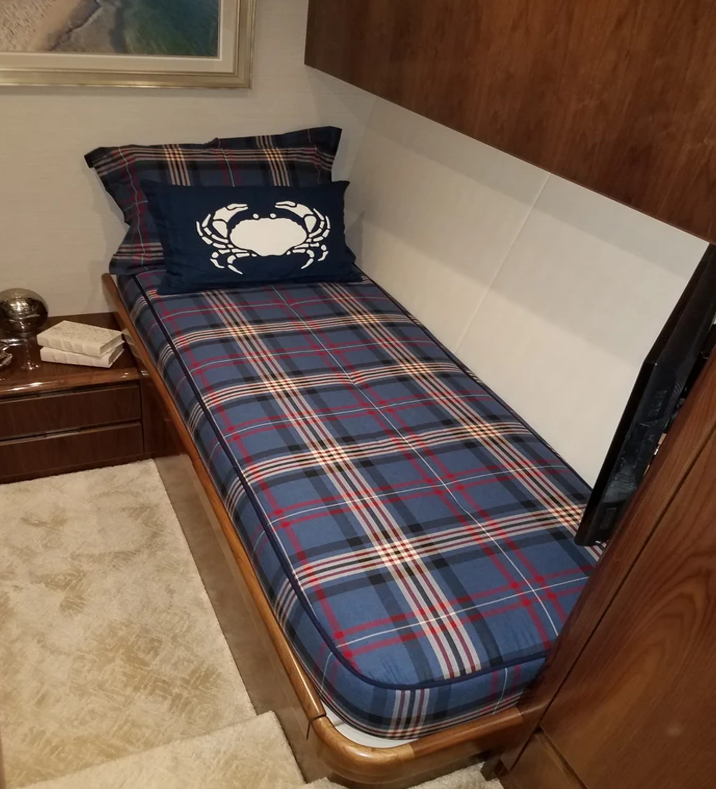
A custom boat mattress offers a practical solution for these challenges. By considering the berth’s shape, the required mattress thickness, material selection, and sleeping preferences, boat owners can create a sleeping surface that makes better use of the available space.
Understanding the available options and preparation requirements can help you select a marine mattress that balances comfort, fit, durability, and maintenance.
Why Do Boat Owners Need a Custom Boat Mattress?
Boat interiors are designed around the vessel’s structure, storage requirements, and available cabin space. As a result, sleeping areas frequently have dimensions and shapes that differ from those of residential beds. A custom mattress is designed around these specific requirements rather than forcing a standard mattress into an unsuitable space.
Understanding Irregular Boat Berth Shapes
V-shaped berths, rounded corners, angled walls, and tapered sleeping areas are common features in marine interiors. A rectangular mattress may leave unused gaps or extend beyond the berth’s supporting surface.
A custom mattress can be manufactured to follow the berth’s measurements, including its narrow end, wider section, and angled edges. Accurate shaping helps create a more consistent sleeping surface while making efficient use of limited cabin space.
Improving Comfort in Compact Sleeping Spaces
Space restrictions can affect mattress thickness, movement, and sleeping position. The right mattress should provide sufficient cushioning and support without interfering with surrounding cabinetry, storage compartments, or cabin access.
Custom sizing allows boat owners to consider the available height and width alongside their comfort preferences. The result is a sleeping surface designed to work with the vessel’s interior rather than against it.
Replacing Worn or Poorly Fitting Marine Mattresses
An existing mattress may become compressed, lose its shape, or provide inadequate support over time. Fabric damage, persistent odours, and difficulty keeping the sleeping area clean can also indicate that replacement is worth considering.
A replacement mattress should address the original fit and comfort issues. Measuring the berth again and reviewing the condition of its supporting base can help determine whether a new mattress or a redesigned shape is the more suitable option.
What Types of Custom Boat Mattresses Are Available?
Custom marine mattresses can accommodate different berth layouts, cabin sizes, and sleeping arrangements. Identifying the berth type before selecting materials helps ensure that the finished mattress suits the vessel’s intended use.
V-Berth Mattresses for Tapered Sleeping Areas
A V-berth is typically positioned toward the bow, where the available space narrows toward the front of the vessel. Its triangular or tapered layout often makes standard mattresses unsuitable.
A custom V-berth mattress can be shaped to follow the narrowing footprint and fit the surrounding structure. Depending on the design, the sleeping surface may use one shaped mattress or multiple sections.
Custom Mattresses for Yacht Staterooms
Yacht staterooms may feature island beds, angled corners, curved cabinetry, or non-standard dimensions. A custom mattress can accommodate these layouts while allowing owners to select their preferred firmness, thickness, and upholstery.
Material selection should reflect both comfort requirements and the conditions inside the cabin. Appropriate construction and fabric choices can help maintain the mattress’s usability over time.
Mattresses for Crew Berths and Compact Cabins
Crew sleeping areas and smaller cabins often require careful use of limited space. Slimmer mattresses or specifically shaped sections can help maintain clearance around nearby fixtures and storage.
The selected mattress should provide appropriate support while fitting the available footprint and accommodating the expected sleeping requirements.
Custom Shapes for Curved and Angled Berths
Some vessels feature unusual berth designs that cannot be accurately described using length and width alone. Curved fronts, clipped corners, and angled sides may require a detailed template.
Providing clear measurements and identifying each irregular edge helps the manufacturer reproduce the intended shape more accurately. This is particularly important when the mattress must fit closely against the surrounding interior.
How to Choose the Right Mattress Materials
Material selection influences comfort, support, weight, durability, and maintenance. Before choosing a construction type, consider how frequently the berth will be used, the conditions inside the cabin, and the level of cushioning required.
For additional information about available mattress options and custom sizing, explore Canvas Designers. Reviewing the available customisation choices can help you identify suitable options for your vessel’s sleeping area.
Memory Foam, Latex, Innerspring, and Polyfoam Options
Different mattress materials offer distinct characteristics.
- Memory foam: Conforms to the body and helps distribute pressure. Its feel and heat retention vary according to its formulation and density.
- Latex: Often provides a responsive feel and can offer durable support. Weight, cost, and moisture management should be considered when assessing its suitability for a boat.
- Innerspring: Uses a system of springs to provide support. Its weight, internal construction, and suitability for the available berth should be reviewed before selecting it for marine use.
- Polyfoam: Available in different densities and firmness levels, making it a versatile option for shaped mattresses and compact sleeping spaces.
No single material is best for every vessel. The appropriate choice depends on comfort preferences, berth design, ventilation, and the mattress’s expected use.
Comparing Firmness, Support, and Sleeping Comfort
Firmness describes how soft or hard a mattress feels, while support relates to how well it accommodates the body. These characteristics are connected but are not interchangeable.
Side sleepers may prefer cushioning around pressure points, while back and stomach sleepers may need a different balance of firmness and support. Body weight and personal preference also influence mattress selection.
When comparing foam options, consider density, resilience, and compression characteristics rather than relying on firmness alone. The mattress should retain its shape and provide a comfortable sleeping surface over time.
Selecting Fabrics for Marine Environments
Mattress covers should be suitable for the conditions in which the vessel operates. Marine interiors can experience humidity, condensation, salt exposure, and limited airflow, depending on the location and use of the boat.
Look for upholstery fabrics that are durable, easy to maintain, and appropriate for the intended environment. Removable covers may simplify routine cleaning, while breathable fabric constructions can support moisture management.
Fabric suitability should be assessed alongside the mattress core, because a durable cover cannot compensate for a core that remains damp.
Considering Humidity, Ventilation, and Maintenance
Moisture management is particularly important in enclosed cabins. Condensation and restricted airflow can allow moisture to accumulate beneath a mattress, potentially contributing to unpleasant odours and material deterioration.
Choose a mattress construction that works with the berth’s ventilation arrangements. Depending on the design, additional airflow beneath the mattress may be beneficial. Regularly airing the sleeping area, inspecting the underside, and following the manufacturer’s cleaning instructions can also help maintain the mattress.
How to Measure for a Custom Boat Mattress
Accurate measurements are essential because even small discrepancies can affect the fit of a mattress designed for a confined berth. Measure the actual supporting area and account for the vessel’s structural features before placing an order.
Measure the Length and Width of the Berth
Start by measuring the longest length and widest width of the sleeping area. For tapered berths, measure the width at several points rather than assuming the sides are parallel.
Record the measurements clearly and identify where each measurement was taken. Check whether the berth’s edges are straight, angled, or curved, and confirm that the mattress will sit within the intended supporting surface.
Account for Tapered Corners and Angled Edges
Length and width alone are insufficient for many marine berths. Measure the position of angled corners, the width at the narrow end, and any changes in the berth’s outline.
For curved or irregular shapes, a full-size template can help communicate the intended dimensions. Label the template’s orientation so that the bow, stern, head end, and foot end are not confused during manufacturing.
Determine the Required Mattress Thickness
Measure the available vertical clearance, including the space beneath nearby furniture, lids, or other fixtures. Consider how mattress thickness may affect access, seating height, and the ability to open storage compartments.
The supporting base also matters. A mattress that is too thick may interfere with the cabin layout, while one that is too thin may not provide the desired cushioning. Select a thickness that balances support, comfort, and practical clearance.
Provide Accurate Templates and Measurements
Before submitting measurements, check all dimensions again and make sure the units are consistent. Include notes about rounded edges, cut-outs, separate sections, and any unusual features.
Ask the manufacturer whether it prefers measurements, a physical template, or a particular template format. Confirming these requirements beforehand reduces the risk of errors and helps ensure that the finished mattress matches the berth.
Custom Boat Mattress vs. Standard Mattress
A standard mattress can be suitable when a berth has conventional dimensions and a rectangular footprint. However, many marine sleeping spaces require more specialised sizing.
Differences in Fit and Available Dimensions
Standard mattresses are manufactured in established size ranges, which may not match a boat’s berth. Trimming a conventional mattress without appropriate planning can compromise its construction or leave an unsuitable fit.
A custom mattress can accommodate specific lengths, widths, tapered ends, and irregular corners. This flexibility is particularly valuable when cabin space is limited and every part of the sleeping area needs to be considered.
Comfort and Support for Marine Sleeping Areas
A mattress should match the sleeper’s comfort preferences as well as the berth’s shape. Custom ordering can make it easier to consider foam density, firmness, thickness, and cover material together.
Marine conditions also introduce considerations that may be less prominent in a typical bedroom, including humidity, airflow, and limited access for cleaning. These factors should influence the final specification.
When to Replace or Rework an Existing Mattress
Replacement is worth considering when a mattress has persistent sagging, damaged fabric, deteriorated foam, or a shape that no longer fits properly. Reworking may be possible if the core remains suitable and the issue is limited to the cover or dimensions.
Before deciding, inspect the mattress and supporting base. If the underlying material has lost its integrity, replacing the mattress may be more appropriate than modifying the existing one.
What to Consider Before Ordering a Custom Marine Mattress
A successful order begins with a clear understanding of the berth, intended use, and desired mattress characteristics. Reviewing these details before production helps establish realistic expectations for the finished product.
Assess Your Sleeping Space and Usage Requirements
Determine whether the mattress will be used regularly, seasonally, or mainly during occasional trips. Consider how many people will use it, the available cabin space, and whether the mattress needs to be divided into sections for storage or access.
These requirements influence the dimensions, thickness, material choice, and overall construction. It is also useful to check whether the berth has a solid base, slats, or another support structure.
Choose Suitable Foam and Fabric Combinations
Select a mattress core based on the desired balance of cushioning, firmness, and resilience. Then choose an appropriate cover that can withstand the expected conditions and maintenance routine.
Consider the complete mattress rather than evaluating the foam and fabric independently. Weight, moisture management, cover removal, and ease of handling may all affect how practical the final product is for the vessel.
Review Manufacturing, Delivery, and Fitting Requirements
Before confirming an order, check the manufacturer’s available customisation options, measurement requirements, production timeframe, delivery arrangements, and return or adjustment policies.
Confirm the final dimensions, material specifications, cover details, and mattress thickness in writing. If the mattress is unusually large or the cabin entrance is narrow, check that it can be moved into the vessel without difficulty.
For questions about product specifications, measurements, or ordering requirements, visit the manufacturer’s contact page to request further information.
Frequently Asked Questions About Custom Boat Mattresses
Is a Custom Boat Mattress Better Than a Standard Mattress?
A custom boat mattress is often more suitable when the berth has tapered sides, angled corners, curved edges, or non-standard dimensions. It can also accommodate specific thickness and material preferences. A standard mattress may be sufficient if the berth has conventional dimensions and provides adequate clearance.
Can You Get a Mattress Made for a V-Berth?
Yes. A mattress can be manufactured to fit the tapered shape of a V-berth. Accurate measurements of the length, width at multiple points, angled edges, and narrow end are important. A template may be helpful when the berth has an irregular outline.
What Is the Best Foam for a Boat Mattress?
The best foam depends on the desired firmness, support, weight, ventilation, and budget. Memory foam offers contouring, latex provides a responsive feel, and polyfoam is available in different densities and firmness levels. Consider the cabin’s moisture conditions and intended use before choosing a material.
How Do You Measure a Boat Mattress?
Measure the berth’s length and width, recording widths at several points if the space tapers. Include angled corners, curves, cut-outs, and required thickness. Check all measurements twice and provide a clearly labelled template when the shape is complex.
Can an Existing Boat Mattress Be Replaced or Reworked?
Yes. A worn mattress can often be replaced with a newly shaped version. Reworking may be suitable when the mattress core remains in good condition and only the cover or dimensions need attention. Inspect the foam, fabric, and supporting base before deciding which option is appropriate.
Conclusion: Find a Custom Boat Mattress That Fits Your Berth
Choosing the right marine mattress involves more than selecting a comfortable material. The berth’s shape, available clearance, mattress thickness, support requirements, fabric durability, and moisture management all influence the final result.
Careful measurements and a clear understanding of the available materials help you specify a mattress that fits the vessel and supports your sleeping preferences. Reviewing manufacturing requirements and confirming the details before ordering can also reduce the likelihood of fitting problems.
With the right combination of accurate sizing, suitable materials, and practical maintenance, a custom boat mattress can make better use of cabin space while providing a more comfortable and functional sleeping area.
