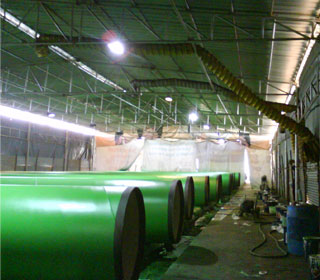
Temperature and humidity can have a significant effect on blasting, painting, and coating projects. Surface preparation may be affected by condensation, while excessive moisture can interfere with coating application and curing. If environmental conditions are not controlled, contractors may face delays, inconsistent finishes, adhesion concerns, or the need for additional surface preparation. Climate control equipment can help create more stable working conditions by managing temperature, humidity, and moisture within the project environment.
Industrial climate control is particularly relevant when work needs to continue despite changing outdoor conditions. Enclosed work areas, temporary structures, industrial facilities, and controlled zones can all require environmental management during surface preparation and coating operations. The appropriate equipment depends on the size of the area, required temperature and humidity range, project duration, and environmental conditions. Understanding these factors helps project teams plan climate control more effectively.
What Is Climate Control Equipment?
Climate control equipment is used to regulate environmental conditions within a defined work area. Depending on the project, this may involve controlling temperature, humidity, airflow, or a combination of these factors. Equipment can include heaters, air conditioning systems, dehumidifiers, air handlers, and other temporary environmental control systems.
For blasting and coating projects, the objective is often to establish conditions that allow surface preparation and coating materials to perform as intended. This requires more than simply maintaining a comfortable temperature. Relative humidity, surface temperature, dew point, and airflow may all need to be considered.
Climate control equipment can be planned around factors such as:
- Work area dimensions
- Ambient temperature
- Relative humidity
- Surface temperature
- Dew point
- Moisture levels
- Required coating conditions
- Airflow requirements
- Project duration
The exact environmental requirements depend on the coating system, substrate, project specifications, and manufacturer’s instructions.
Why Temperature Matters During Blasting and Coating
Temperature influences the behavior of surfaces and coating materials. A surface that is too cold may create condensation or affect coating application and curing. Excessive heat can also affect working conditions and the behavior of certain coating materials.
For this reason, temperature should be monitored rather than estimated. The air temperature alone does not provide a complete picture of the environment. Surface temperature and dew point can also determine whether conditions are suitable for surface preparation or coating.
Maintaining appropriate temperature conditions can help contractors:
- Reduce the risk of condensation
- Support predictable coating application
- Maintain appropriate material viscosity
- Support curing conditions
- Reduce weather-related interruptions
- Maintain more consistent working conditions
The appropriate temperature range should always be determined according to the coating manufacturer’s specifications and project requirements.
Why Humidity Control Is Important
Humidity describes the amount of moisture present in the air relative to the maximum amount the air can hold at a particular temperature. High relative humidity can increase the risk of condensation when surface temperatures approach the dew point. Moisture on a prepared surface can interfere with coating adhesion and contribute to coating defects.
Humidity can also affect the drying and curing behavior of some coating systems. The impact depends on the product, substrate, application method, and environmental conditions. This is why monitoring humidity is an important part of controlled blasting and coating operations.
Industrial projects may require humidity control to:
- Reduce condensation risk
- Maintain suitable coating conditions
- Support surface preparation
- Improve environmental consistency
- Reduce weather-related disruptions
- Support predictable drying and curing
Dehumidification is often one component of a broader climate control strategy. Heating and airflow may also be necessary depending on the environmental conditions.
Understanding Dew Point and Surface Temperature
Dew point is an important consideration during blasting and coating because it indicates the temperature at which air becomes saturated and moisture can begin to condense. If a prepared surface is close to or below the dew point, condensation can form even when the surrounding air does not appear particularly humid.
This makes surface temperature monitoring important. A surface may be colder than the surrounding air because of the temperature of the substrate or surrounding conditions. Contractors therefore need to consider air temperature, relative humidity, and surface temperature together.
Before coating, project teams may monitor:
- Air temperature
- Relative humidity
- Surface temperature
- Dew point
- Difference between surface temperature and dew point
The required difference between the surface temperature and dew point should follow the relevant coating specification and project requirements. Monitoring these measurements can help determine whether conditions are suitable for the next stage of work.
Climate Control for Blasting
Abrasive blasting is often used to remove contaminants, corrosion, old coatings, and other surface materials before a new coating is applied. Once the surface has been prepared, exposure to moisture can create problems if environmental conditions are not controlled.
A prepared metal surface can be particularly sensitive to condensation. If moisture forms before coating application, the surface may need to be inspected and potentially prepared again. Maintaining appropriate environmental conditions can therefore help protect the prepared surface between blasting and coating.
Climate control for blasting may involve:
- Dehumidification
- Heating
- Air movement
- Temperature monitoring
- Humidity monitoring
- Dew point monitoring
- Controlled enclosure conditions
The specific equipment configuration depends on the work area and environmental conditions. A temporary climate control system may be especially useful when blasting and coating need to take place within an enclosed or partially enclosed environment.
Climate Control for Painting and Coating
Painting and coating systems often have specific environmental requirements. These may include limits for temperature, relative humidity, substrate temperature, and dew point. If conditions fall outside the manufacturer’s recommendations, the coating may not perform as expected.
Climate control helps project teams create a more predictable environment. Dehumidification can reduce moisture in the air, while heating can raise temperature when conditions are too cold. Air conditioning may be useful when temperatures need to be reduced, while controlled airflow can help distribute conditioned air.
The appropriate system depends on the project rather than a single standard configuration. Equipment should be selected based on the volume of the enclosure, environmental conditions, heat and moisture loads, and the desired operating range.
How Poor Environmental Control Can Affect Coating Work
Environmental conditions can influence several stages of a coating project. Moisture may interfere with surface preparation, application, or curing. Temperature changes can also affect material behavior and drying times.
Potential concerns associated with unsuitable conditions include:
- Surface condensation
- Poor coating adhesion
- Uneven drying
- Extended curing periods
- Blistering or other coating defects
- Additional surface preparation
- Project delays
- Increased material or labor requirements
Not every coating problem is caused by temperature or humidity. Surface contamination, incorrect application, substrate condition, mixing, equipment settings, and other factors can also affect coating performance. Environmental monitoring should therefore be part of a broader quality control process.
Choosing Industrial Climate Control Equipment
Selecting climate control equipment requires an assessment of the complete work environment. A system that works well in one enclosure may not provide sufficient capacity in another. Equipment sizing should account for the area being controlled, external weather conditions, heat sources, moisture sources, insulation, and required environmental conditions.
Project teams should consider:
- Size and configuration of the work area
- Type of enclosure
- Current temperature and humidity
- Desired temperature and humidity
- Moisture infiltration
- Heat generation
- Available power
- Airflow requirements
- Project duration
- Monitoring and control requirements
The type of coating being applied should also be considered. Product specifications may establish particular environmental limits for application and curing. These requirements should guide the climate control plan.
Temporary Climate Control for Industrial Projects
Temporary climate control can be useful when environmental management is required for a limited period. This may occur during shutdowns, maintenance, refurbishment, new construction, surface preparation, or major coating projects.
Temporary systems allow project teams to create controlled working conditions without installing permanent climate infrastructure. Equipment can be configured according to the project requirements and removed when the work is complete.
Temporary climate control may be particularly useful when:
- Outdoor conditions are unsuitable for coating
- Work needs to continue across changing seasons
- A temporary enclosure has been constructed
- Existing facility systems cannot provide sufficient control
- A project requires additional drying capacity
- Environmental conditions need to be controlled for a defined period
The system should be planned before work begins so that environmental conditions can be stabilized before surface preparation or coating starts.
Climate Control and Moisture-Sensitive Industries
Humidity control is not limited to blasting and coating projects. Many industries require controlled environmental conditions to protect products, equipment, or processes. Pharmaceutical operations, for example, can have strict environmental requirements relating to temperature and humidity.
A dehumidifier for pharmaceutical industry applications may be used as part of a broader environmental control strategy where moisture needs to be managed carefully. The appropriate equipment and operating conditions depend on the facility, process, product requirements, and applicable specifications.
This demonstrates why industrial climate control should be designed around the specific application rather than using a generic equipment configuration.
Climate Control for Water Damage and Restoration Work
Moisture management is also important during restoration projects. Water intrusion can leave elevated moisture levels in building materials and enclosed spaces even after visible water has been removed. Controlled drying can help reduce remaining moisture and prepare affected areas for restoration.
A water damage restoration service may involve dehumidification, air movement, monitoring, and other drying methods depending on the extent of the moisture problem. Environmental conditions should be assessed throughout the process rather than relying only on visible signs of dryness.
The same principles apply to industrial coating projects. Moisture sources need to be identified, environmental conditions monitored, and equipment adjusted when conditions change.
Monitoring Temperature and Humidity During the Project
Installing climate control equipment is only one part of environmental management. Conditions should be monitored throughout the work because temperature and humidity can change as the project progresses. Outdoor weather, equipment operation, moisture release from materials, and changes to the enclosure can all affect the controlled environment.
Regular monitoring can help identify changes before they affect the work. Measurements should be compared with the coating manufacturer’s specifications and project requirements. If conditions move outside the acceptable range, the climate control system may need to be adjusted.
Useful monitoring practices include:
- Recording temperature at appropriate locations
- Measuring relative humidity
- Checking surface temperature
- Calculating or monitoring dew point
- Tracking environmental changes
- Verifying conditions before coating
- Maintaining project records
Documentation can also provide useful evidence that environmental conditions were monitored during critical stages of the project.
Planning Climate Control for Better Project Management
Climate control should ideally be considered during project planning rather than after environmental problems occur. Early assessment allows contractors to determine equipment requirements, power needs, enclosure requirements, monitoring procedures, and operating costs.
A project plan should identify the environmental conditions required for each major stage. Blasting may have different requirements from coating application, and curing may introduce additional considerations. The climate control system should therefore be capable of supporting the project’s changing requirements.
Early planning can help reduce unexpected interruptions and make environmental management easier to coordinate with other project activities. It also gives the project team an opportunity to determine whether temporary or permanent climate control is more appropriate.
Choosing a Climate Control Partner
Industrial blasting, painting, and coating projects can involve large work areas and demanding environmental conditions. Choosing equipment without considering the moisture load, temperature requirements, enclosure characteristics, and project specifications can lead to insufficient environmental control.
A professional provider can assess the project requirements and recommend appropriate equipment and configuration. This can include dehumidification, heating, cooling, airflow, and monitoring equipment depending on the application.
For industrial projects requiring controlled environmental conditions, contact Technical Drying Services to discuss the temperature, humidity, and climate control requirements of your project.
Conclusion
Temperature and humidity control can be an important part of successful blasting, painting, and coating projects. Environmental conditions affect surface preparation, condensation risk, coating application, and curing, making climate control a consideration that should be addressed before work begins. Climate control equipment can help project teams establish more consistent conditions by managing temperature, humidity, airflow, and moisture.
The right system depends on the specific project, coating requirements, enclosure, environmental conditions, and duration of the work. Regular monitoring of air temperature, relative humidity, surface temperature, and dew point can help ensure that conditions remain within the required range. With proper planning, equipment selection, and environmental monitoring, controlled climate conditions can support more predictable industrial blasting and coating operations.
Frequently Asked Questions
1. What is climate control equipment used for in blasting and coating?
Climate control equipment helps manage temperature, humidity, airflow, and moisture within a work area. In blasting and coating projects, controlling these conditions can help reduce condensation risks and support suitable application and curing conditions.
2. Why is humidity important when painting?
High humidity can increase the risk of condensation and may affect the application or curing of some coating systems. The acceptable humidity range depends on the coating product, substrate, project specifications, and environmental conditions.
3. What is the relationship between dew point and coating?
Dew point indicates the temperature at which moisture can begin to condense from the air. If a prepared surface is too close to the dew point, condensation may form and interfere with coating application. Air temperature, humidity, and surface temperature should therefore be monitored.
4. Can climate control equipment be used temporarily?
Yes. Temporary climate control systems can be used for defined projects such as blasting, painting, coating, maintenance, refurbishment, and construction. Equipment can be selected according to the project’s environmental requirements and duration.
5. How do I choose the right climate control equipment?
Equipment selection depends on the work area’s size, enclosure, temperature, humidity, moisture load, airflow requirements, power availability, coating specifications, and project duration. A professional assessment can help determine the appropriate equipment and configuration.
