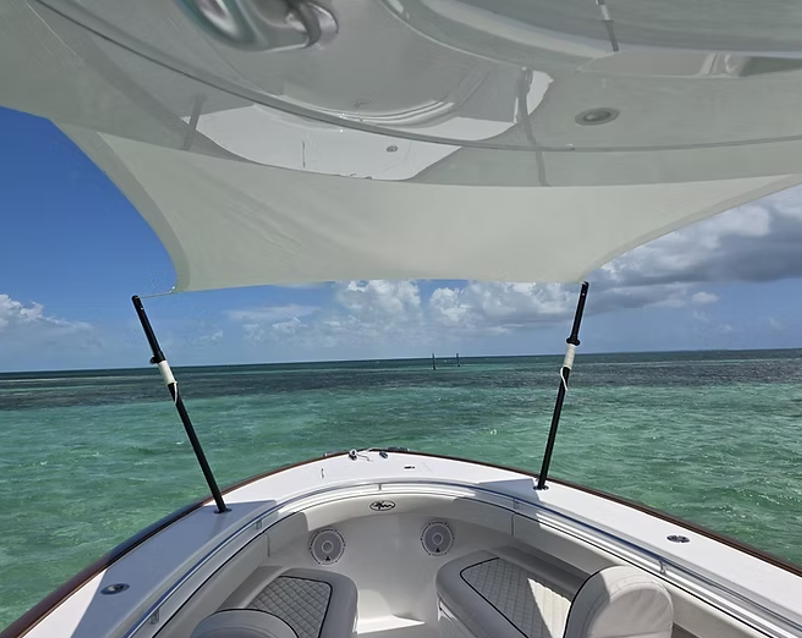
Spending time on the water exposes boat owners and passengers to direct sunlight, particularly on vessels with open decks and limited overhead coverage. While a factory-installed T-top or hardtop can provide shade in specific areas, other parts of the boat may remain exposed. A removable boat sun shade pole system can help extend coverage while maintaining flexibility for fishing, cruising, and other recreational activities.
Choosing the right setup involves more than selecting a pole of the appropriate length. Material, mounting compatibility, shade fabric, hardware quality, and storage requirements all influence the suitability of a system for your vessel. Understanding these factors makes it easier to find a solution that provides useful shade without unnecessarily restricting deck space or movement.
If you are exploring additional coverage for your vessel, a boat sun shade pole system is worth considering as part of your marine shade setup.
What Is a Boat Sun Shade Pole?
A boat sun shade pole is a structural support used to hold marine shade fabric in position. Depending on the system, poles may fit into existing rod holders or connect to compatible mounting points. They help position the fabric at a suitable height and maintain the intended coverage area.
The design of the pole system determines how easily it can be installed, adjusted, removed, and stored. Before purchasing one, boat owners should understand the available mounting methods and the components required for a compatible installation.
How Rod Holder Shade Poles Work
Rod holder shade poles use compatible holders on a boat to support an additional shade structure. This arrangement can be useful when extending coverage without adding permanent mounting points, provided the existing holders and the selected system are compatible.
The pole positions help establish the height and shape of the shade fabric. Correct positioning is important because excessive fabric tension, unsuitable pole angles, or incompatible mounting points can affect stability.
Always confirm that the rod holders are designed and positioned appropriately for the intended installation.
Key Components of a Boat Shade Pole System
A typical system may include support poles, fabric attachment points, tensioning lines, cleats, and compatible mounting hardware. The exact components depend on the product design.
Each component contributes to the system’s function. Poles support the structure, attachment points secure the fabric, and tensioning hardware helps maintain the intended shape. Mounting components connect the system to the boat.
Before ordering, review the manufacturer’s specifications to determine which components are included and whether additional hardware is required.
Fixed-Length Poles Versus Adjustable Shade Supports
Fixed-length poles provide a predetermined height and are suitable when the mounting position and coverage requirements are clearly established. Adjustable supports offer greater flexibility when the system is designed to accommodate different configurations.
However, adjustability alone does not guarantee better performance. Consider the required height, ease of setup, locking mechanisms, storage space, and compatibility with the shade fabric before deciding between the two options.
Benefits of Adding a Removable Sun Shade to Your Boat
A removable shade system provides flexibility when additional coverage is needed without permanently changing the boat’s structure. Its suitability depends on the vessel layout, intended activities, and environmental conditions.
Reduce Direct Sun Exposure on Open Decks
Additional shade can reduce direct sunlight reaching covered seating and deck areas. This can make time aboard more comfortable, especially during extended periods outdoors.
The level of protection depends on fabric coverage, sun angle, installation height, and the position of the boat. Shade does not eliminate all ultraviolet exposure, so appropriate sunscreen, protective clothing, and other sun safety measures remain important.
Preserve Walkways and Fishing Space
A well-planned shade arrangement should provide coverage without obstructing important movement areas. This is particularly relevant for fishing boats, where access to rod holders, casting positions, controls, and storage compartments may be essential.
Before selecting a system, identify the areas that require shade and those that must remain accessible. Consider pole placement, fabric edges, and the clearance needed for normal boat activities.
Make Setup, Removal, and Storage More Convenient
Removable systems can be taken down when shade is unnecessary or when the boat needs to be stored or transported. This flexibility can also help owners clean and inspect individual components.
The actual setup time depends on the design, number of components, and mounting method. Reviewing the manufacturer’s installation instructions can help determine whether the system suits your preferred level of convenience.
Extend Shade Beyond an Existing Bimini or Hardtop
A bimini, T-top, or hardtop may not cover every area where shade is desired. An additional pole-supported fabric arrangement can extend coverage when the existing structure and mounting configuration allow it.
The additional system must be compatible with the boat and should not interfere with existing supports, navigation equipment, or movement around the deck.
How to Choose the Right Boat Sun Shade Pole
Selecting an appropriate pole system requires attention to materials, dimensions, mounting arrangements, and the marine environment. Reviewing these factors together helps avoid compatibility issues and unnecessary replacement costs.
Compare Carbon Fiber and Aluminum Poles
Carbon fiber poles are valued for their lightweight construction and stiffness. Their relatively low weight can make handling and storage easier, although performance depends on the pole’s design, dimensions, and construction quality.
Aluminum poles are another option, offering a familiar balance of weight, strength, and cost. Their suitability depends on the alloy, finish, wall thickness, and intended application.
Carbon fiber is not immune to damage, and aluminum can corrode under unsuitable conditions. Compare product specifications rather than assuming that one material is universally better.
Select the Appropriate Pole Length and Coverage Area
Pole length affects the height, reach, and positioning of the shade fabric. A pole that is too short may not provide the intended coverage, while an unsuitable longer pole can introduce additional leverage and stability concerns.
Measure the area requiring shade and consider the location of available mounting points. Account for fabric dimensions, attachment positions, and the desired clearance above the deck.
Use the manufacturer’s sizing recommendations to identify a suitable configuration.
Check Rod Holder Diameter and Mounting Compatibility
Not every pole fits every rod holder. Differences in diameter, insertion depth, mounting design, and retention mechanisms can prevent an otherwise suitable product from fitting correctly.
Measure the available holders and compare those measurements with the product specifications. Also check whether the mounting position allows the poles to support the fabric at the intended angle.
Never force an incompatible pole into a holder or modify structural components without appropriate guidance.
Consider Marine-Grade Hardware and Corrosion Resistance
Marine shade equipment is exposed to moisture, salt residue, sunlight, and changing temperatures. Hardware selection therefore matters alongside pole material.
Look for clear information about fittings, fasteners, finishes, and maintenance requirements. Where different materials connect, inspect the manufacturer’s guidance on corrosion prevention and material compatibility.
Quality hardware and appropriate care can help maintain the system’s condition over time.
Boat Sun Shade Pole Installation and Setup
Proper installation helps the shade system function as intended. Always follow the instructions supplied with the specific product rather than relying on assumptions based on another boat or mounting arrangement.
Prepare the Existing Hardtop, T-Top, or Mounting Points
Inspect the intended mounting locations before installation. Check for visible damage, looseness, corrosion, or other issues that could affect secure attachment.
Confirm that the selected system is compatible with the existing structure. Do not assume that every T-top, hardtop, or rod holder can support additional shade equipment.
Attach and Tension the Shade Fabric
Connect the fabric according to the manufacturer’s instructions. Position the poles and attachment points carefully, then apply the recommended tension.
Fabric that is excessively loose may flap, while excessive tension can place unnecessary stress on the poles, fittings, and mounting points. Follow the specified tensioning procedure and avoid improvised modifications.
Secure the Poles and Check System Stability
Check that all poles, fittings, and retaining mechanisms are correctly positioned. Inspect the fabric attachment points and ensure that the installation does not obstruct controls, walkways, or fishing equipment.
Test the setup under appropriate conditions and follow the manufacturer’s operating limits. Remove or stow the shade when required by wind conditions, boat operation, or product guidance.
Remove and Store the Poles After Use
When removing the system, release tension in the recommended sequence and handle each component carefully. Clean and dry the poles, hardware, and fabric as appropriate before storage.
Use a suitable storage location that protects the components from unnecessary impacts, abrasion, and prolonged exposure to damaging conditions.
Which Boats Can Use a Rod Holder Shade Pole System?
Rod holder shade systems may suit several vessel types, but compatibility depends on the specific boat layout and product design.
Center Console Boats
Center console boats often have open deck areas where additional shade may be useful. A compatible removable system can help extend coverage beyond the existing T-top or provide shade over selected areas.
Pole placement should preserve casting clearance, access to controls, and movement around the console.
Fishing Boats With T-Tops or Hardtops
Fishing boats with an existing overhead structure may benefit from an additional shade panel when the mounting arrangement supports it. The extra coverage should complement the existing top without creating interference or exceeding the system’s intended limits.
Larger Sportfish Boats and Yachts
Larger vessels may have different deck layouts, rod holder configurations, and structural requirements. Owners should assess the intended coverage area and confirm that the chosen pole system is suitable for the vessel.
For these boats, manufacturer guidance is particularly important when evaluating mounting compatibility and safe operation.
Boat Sun Shade Pole Maintenance and Storage Tips
Routine maintenance helps identify wear before it affects the shade system’s usability. Follow the care instructions provided for the specific pole material, fabric, and hardware.
Rinse Away Salt and Marine Residue
After saltwater use, rinse compatible components with fresh water and remove accumulated residue. Use cleaning products approved by the manufacturer and avoid abrasive materials that may damage protective finishes.
Allow components to dry appropriately before storing them.
Inspect Cleats, Fittings, Lines, and Mounting Points
Check for loose fittings, damaged lines, worn attachment points, cracks, and signs of corrosion. Carbon fiber poles should also be inspected for visible impact damage or surface deterioration.
Replace damaged components according to the manufacturer’s recommendations rather than continuing to use a potentially compromised system.
Store Poles and Fabric Correctly Between Trips
Store poles where they will not roll, fall, or experience unnecessary impact. Clean and dry the fabric before folding or packing it as instructed.
Keep hardware together and inspect the system before reinstalling it after an extended period in storage.
Frequently Asked Questions About Boat Sun Shade Poles
Do Boat Sun Shade Poles Require Drilling?
Not necessarily. Some systems use compatible existing rod holders, while others may require dedicated mounting hardware. Check the product’s installation instructions before purchasing or making modifications.
What Size Boat Shade Pole Should I Choose?
The correct size depends on the required coverage, mounting height, fabric dimensions, and boat layout. Measure the installation area and compare your measurements with the manufacturer’s sizing recommendations.
Are Carbon Fiber Shade Poles Suitable for Saltwater?
Carbon fiber itself offers good resistance to corrosion, but fittings and connected hardware may still corrode. Regular cleaning, inspection, and material-compatible maintenance are important for marine use.
Can Shade Poles Be Used With an Existing Bimini or T-Top?
They may be compatible if the pole system, mounting points, and fabric arrangement are designed to work together. Verify clearance, attachment requirements, and manufacturer guidance before combining shade systems.
How Should Boat Sun Shade Poles Be Maintained?
Rinse away salt residue, inspect poles and fittings for damage, clean the fabric as directed, and store components in a dry, protected location. Follow the manufacturer’s maintenance recommendations for the specific materials.
Conclusion: Finding the Right Boat Sun Shade Pole System
Choosing the right boat sun shade pole system starts with understanding your vessel’s layout and the areas where additional coverage is needed. Pole material, length, mounting compatibility, fabric design, and hardware quality all influence the suitability of the setup.
A removable system can offer useful flexibility for boat owners who want additional shade while preserving access to important deck areas. However, proper installation, regular inspection, and adherence to manufacturer guidelines remain essential for safe use.
Sunfly Poles offers boat shade pole solutions for marine applications. Review the available products and their specifications to determine which configuration meets your requirements. If you need clarification about product compatibility or installation options, visit the contact page for further assistance.
